
![[2026 Dubai Travel Guide] 30 Attractions Map, Transport, Accommodation, Itineraries & Visas | Ultimate Guide](/_astro/00-dubai-prep.DiRjdXR4_Z1m70l3.webp)
![[2026 Dallas Travel Guide] 20 Must-Visit Attractions, Transport, Safety & Itinerary | Dallas](/_astro/00-dallas-prep.OQ0hQ3Rg_aFsvL.webp)

![[Abu Dhabi Travel Guide] 15 Must-Visit Attractions + 4 Days 3 Nights Itinerary | Visa, Transport, Currency, Dress Code & Pass Guide](/_astro/00-abu-dhabi-prep.DOnqdKj1_Z2ff20S.webp)
![[Ultimate Helsinki Travel Guide] 25 Must-Visit Attractions ★ Maps, Transport, Accommodation & Itinerary | Helsinki](/_astro/51-helsinki-prep.nKPI1J5c_Z5EN8F.webp)
![[2026 New York Travel Guide] Map of 35 Must-Visit Attractions, Transport, Safety & Itinerary Planning](/_astro/00-new-york-prep.DgplSFA4_Z27s55s.webp)
![[2026 Las Vegas] Top 30 Attractions, Transport Guide, & Itineraries | The Ultimate Pre-Trip Planning Guide](/_astro/00-las-vegas-prep.DG6JE2Xl_Z2krY7e.webp)
![[London Travel Guide] 36 Must-Visit Attractions ★ Maps, Transport & Itinerary | London Pass Money-Saving Tips | London](/_astro/00-london-prep.BZWJIVCW_21IFhv.webp)


![[2026 San Francisco Travel Guide] 35 Attractions by Neighborhood, Transport, Safety & Itineraries | San Francisco](/_astro/00-san-francisco-prep.BE-nWeLM_2gILQX.webp)

"This isn't San Francisco!" That's exactly what you'll probably shout in your head when stepping into the Japanese Tea Garden in Golden Gate Park. Greeted by arched bridges, a red five-story pagoda, Japanese-style paths, and Japanese pine trees flanking the walkway, we felt like we had completely stepped into an ancient Japanese capital! The tea house inside the garden serves various Japanese teas and treats. Sipping tea in this antique environment while quietly watching the shimmering water of the koi pond, we completely forgot we were in the US!
⛩️ San Francisco Travel Guide
★ Transport: Hop-On Hop-Off Sightseeing Bus|Car Rental
★ SIM Cards: USA/Canada/Mexico SIM Delivery|USA eSIM
★ Tickets: Explorer Pass|California Academy of Sciences|de Young Museum|Walt Disney Family Museum
★ Cruises: Bridge to Bridge Cruise|Alcatraz & San Francisco Bay Cruise|Alcatraz Prison Tour
★ Tours: Wine Country Day Tour|Muir Woods & Sausalito
★ Day Trips: Yosemite National Park
★ Guide: Ultimate San Francisco Travel Guide|Target Shopping List
⛩️ Japanese Tea Garden Information
★ Location: 75 Hagiwara Tea Garden Dr, San Francisco|Map Link
★ Opening Hours: March–October: 9am-6pm|November–February: 9am-5pm
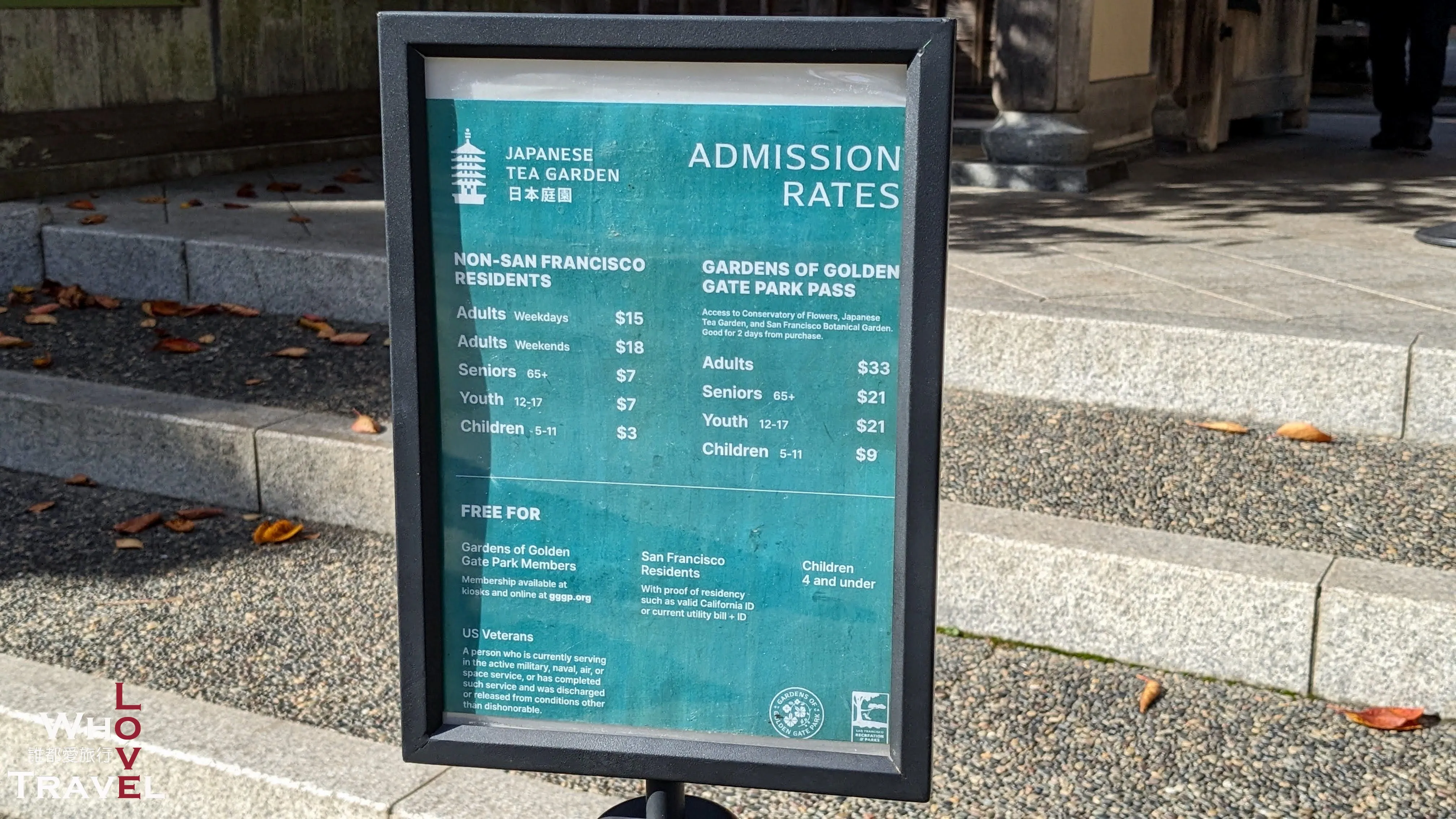
★ Tickets: Official Website|Free admission on Mondays, Wednesdays, and Fridays from 9am-10am
Located right in San Francisco's Golden Gate Park, the Japanese Tea Garden boasts a history of over 130 years, making it the oldest public Japanese garden in the United States!
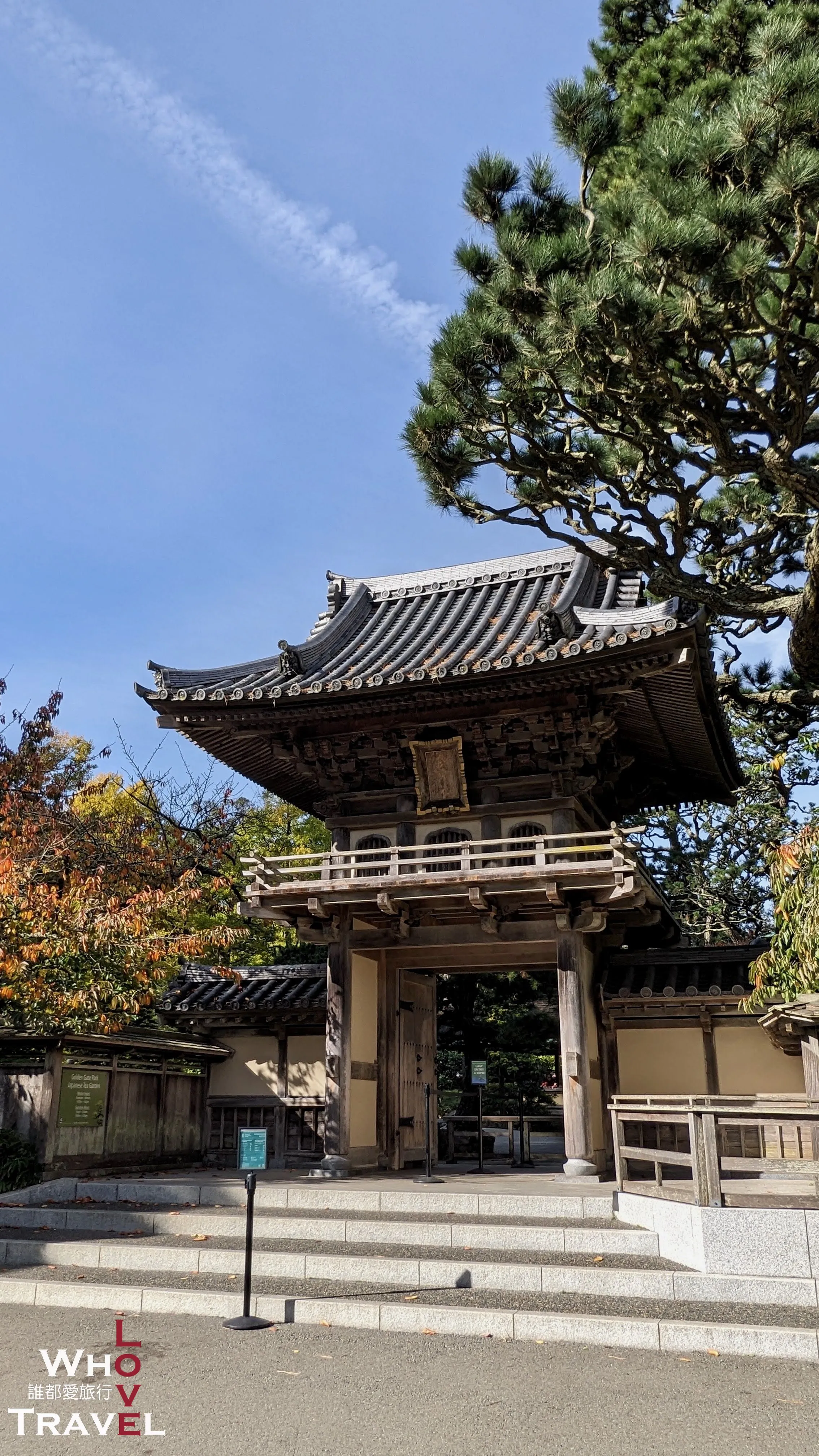
Even before stepping inside the garden, you can feel the overflowing Japanese elements right from this majestic "Romon" (two-story gate)!
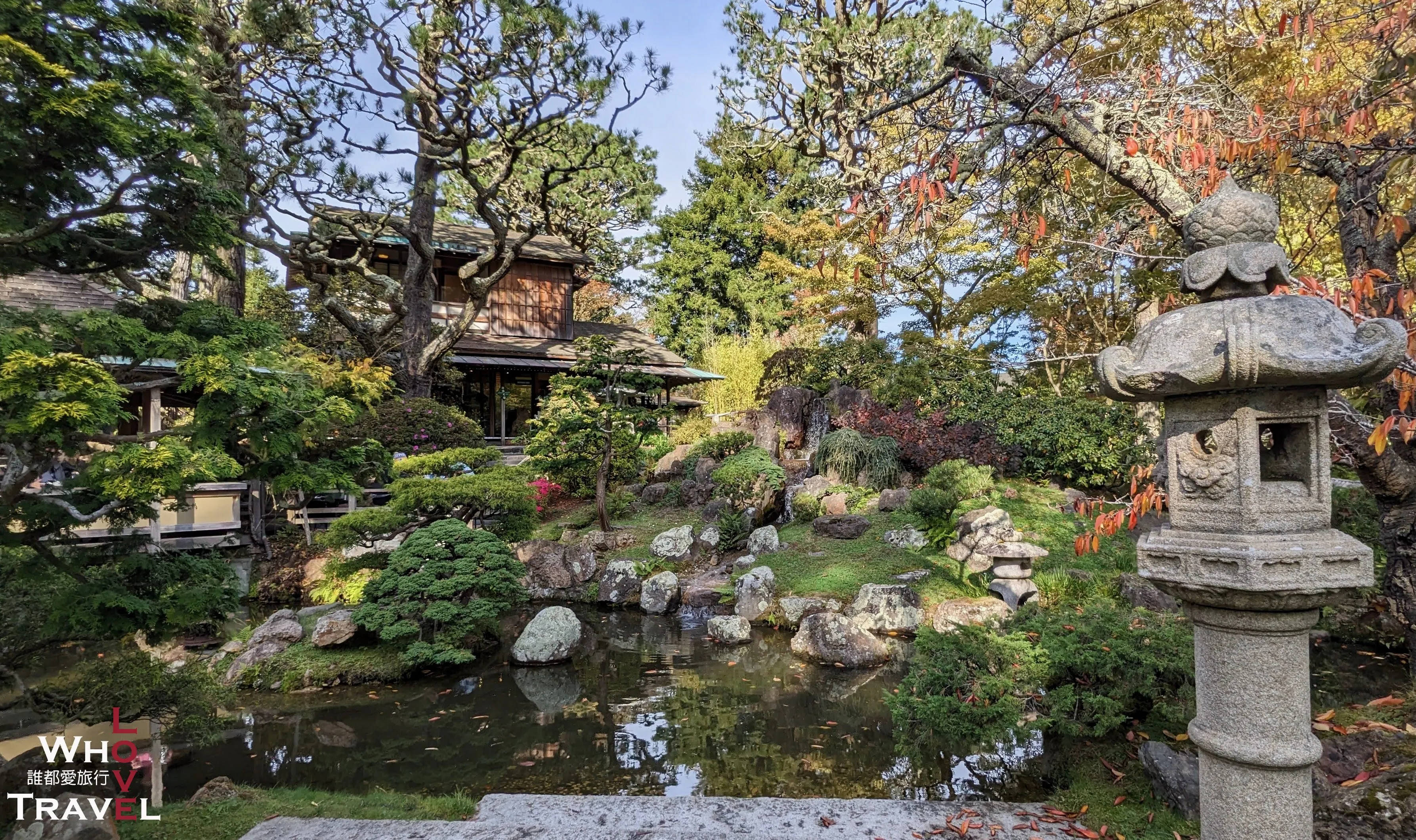
Walking through the Romon feels just like stepping through Doraemon's Anywhere Door. Instantly, your eyes are met with wooden Japanese architecture, stone lanterns, koi ponds, and pine trees—it truly is a one-second portal to Japan! It's a completely different world from the rest of Golden Gate Park just outside the gates.
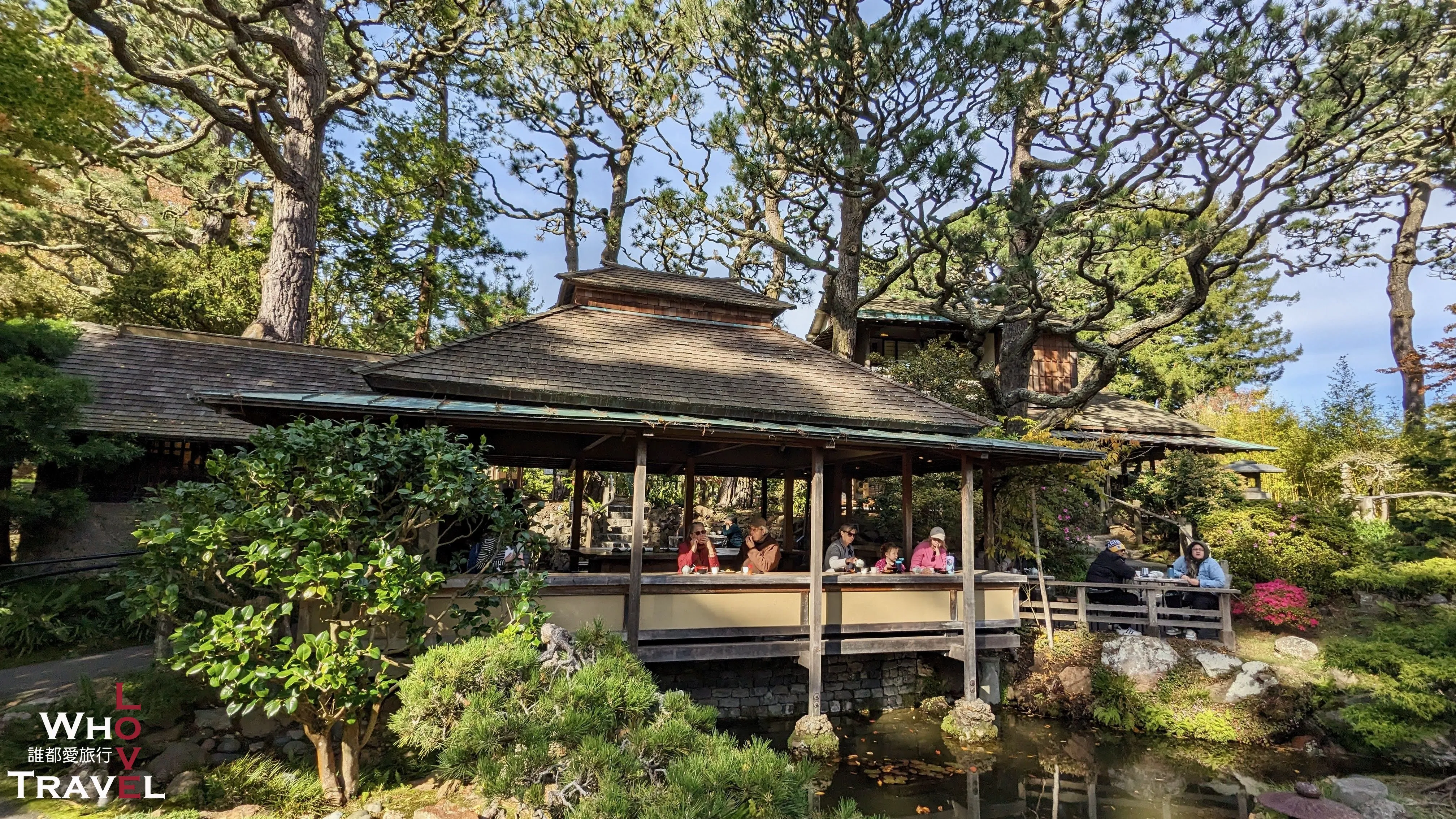
The tea house sits right at the heart of the Japanese Tea Garden.
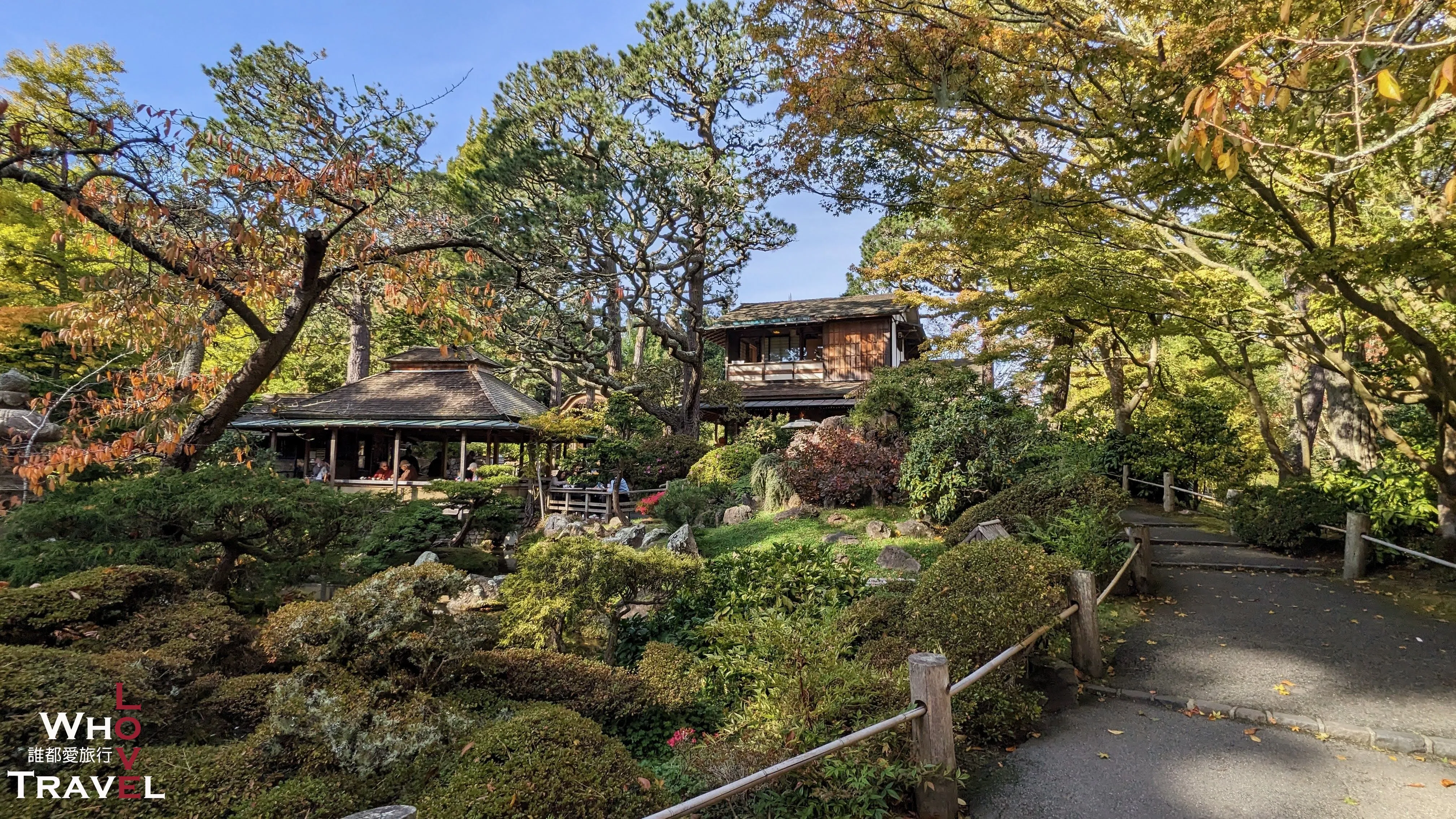
Tucked away amidst the lush green shadows of the trees, the tea house is incredibly tranquil and elegant. It naturally makes you slow your pace and immerse yourself in this serene garden!
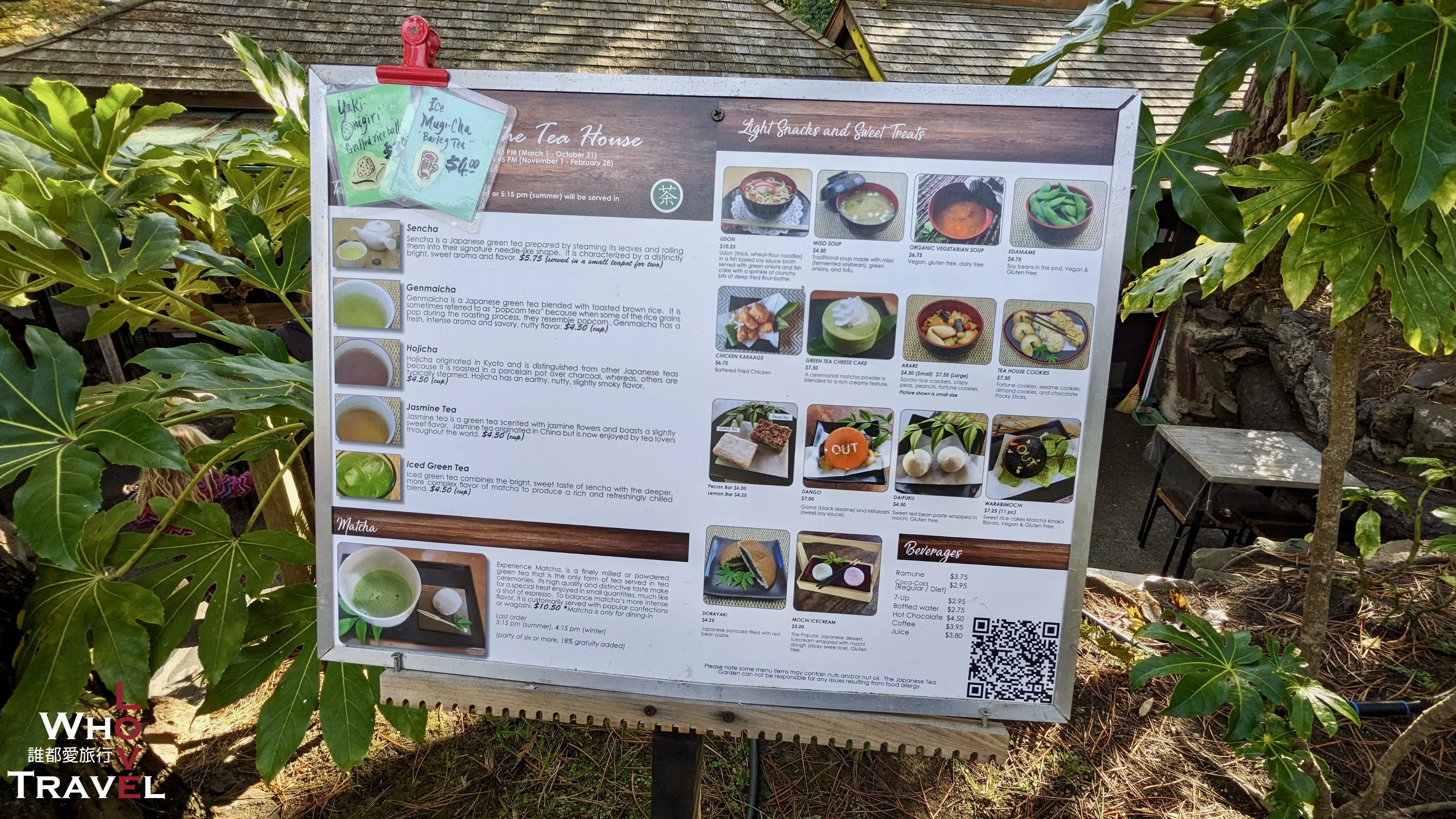
The tea house sells various teas like matcha, alongside treats like matcha cake, mochi ice cream, and dorayaki. If you're looking for something more filling, they also serve light meals such as udon noodles, Japanese fried chicken (karaage), and miso soup! Fun fact: The prototype for the fortune cookies you get after meals at Chinese restaurants in the US first appeared right here at this San Francisco tea house! They were introduced from Japan by Makoto Hagiwara, the garden's designer at the time. Back then, the cookies didn't have fortunes inside, and the flavor was different from the widely popular ones today. However, you can still buy these historical fortune cookies at the tea house today—definitely give them a try if you get the chance!
📌 Recommended Reading: The Half-Century Legend of Fortune Cookies ★ Golden Gate Fortune Cookie Factory
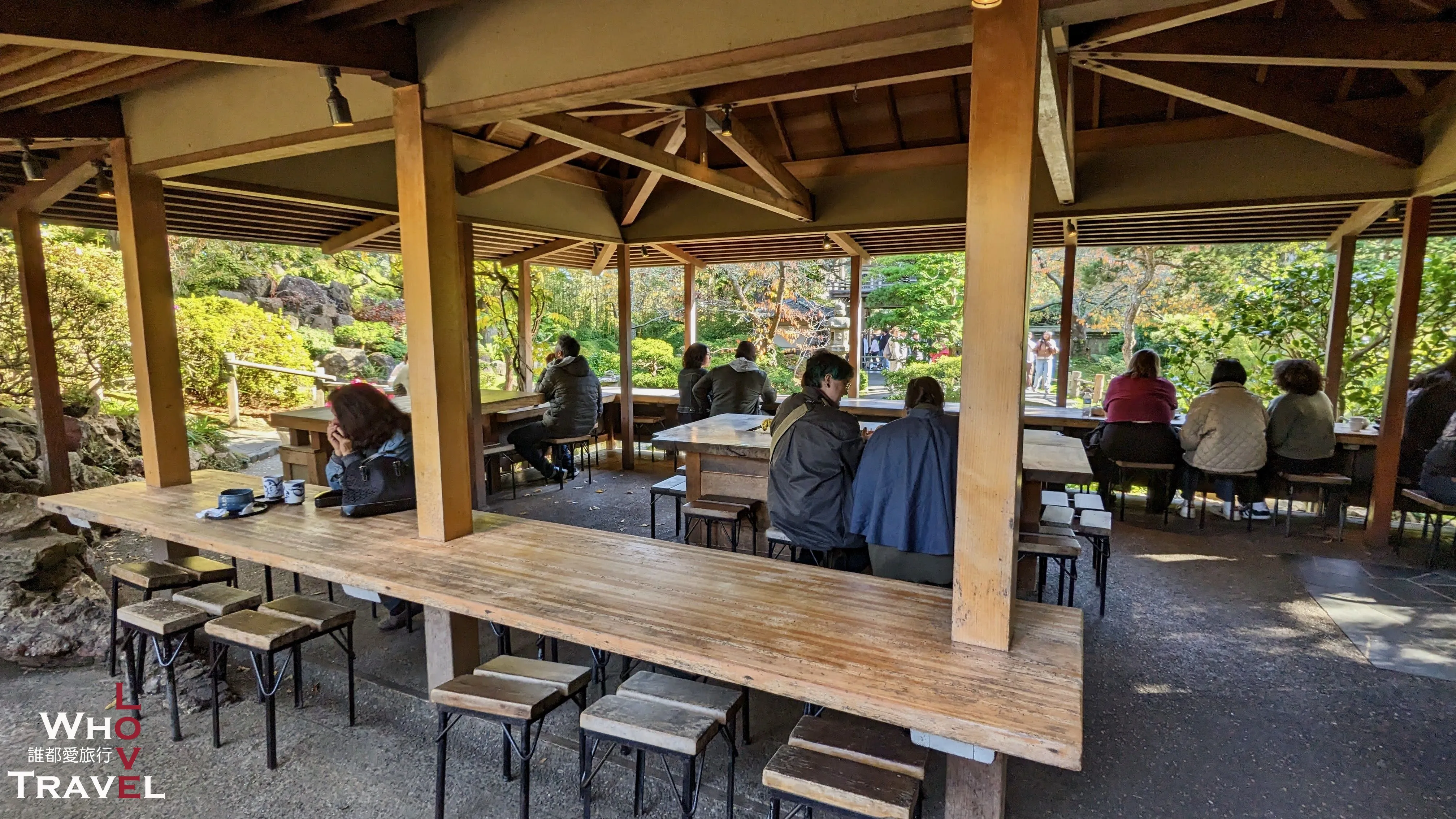
Surrounded by layers upon layers of greenery, with sunlight slanting beautifully through the leaves—it is absolutely worth sitting down for a cup of tea here!
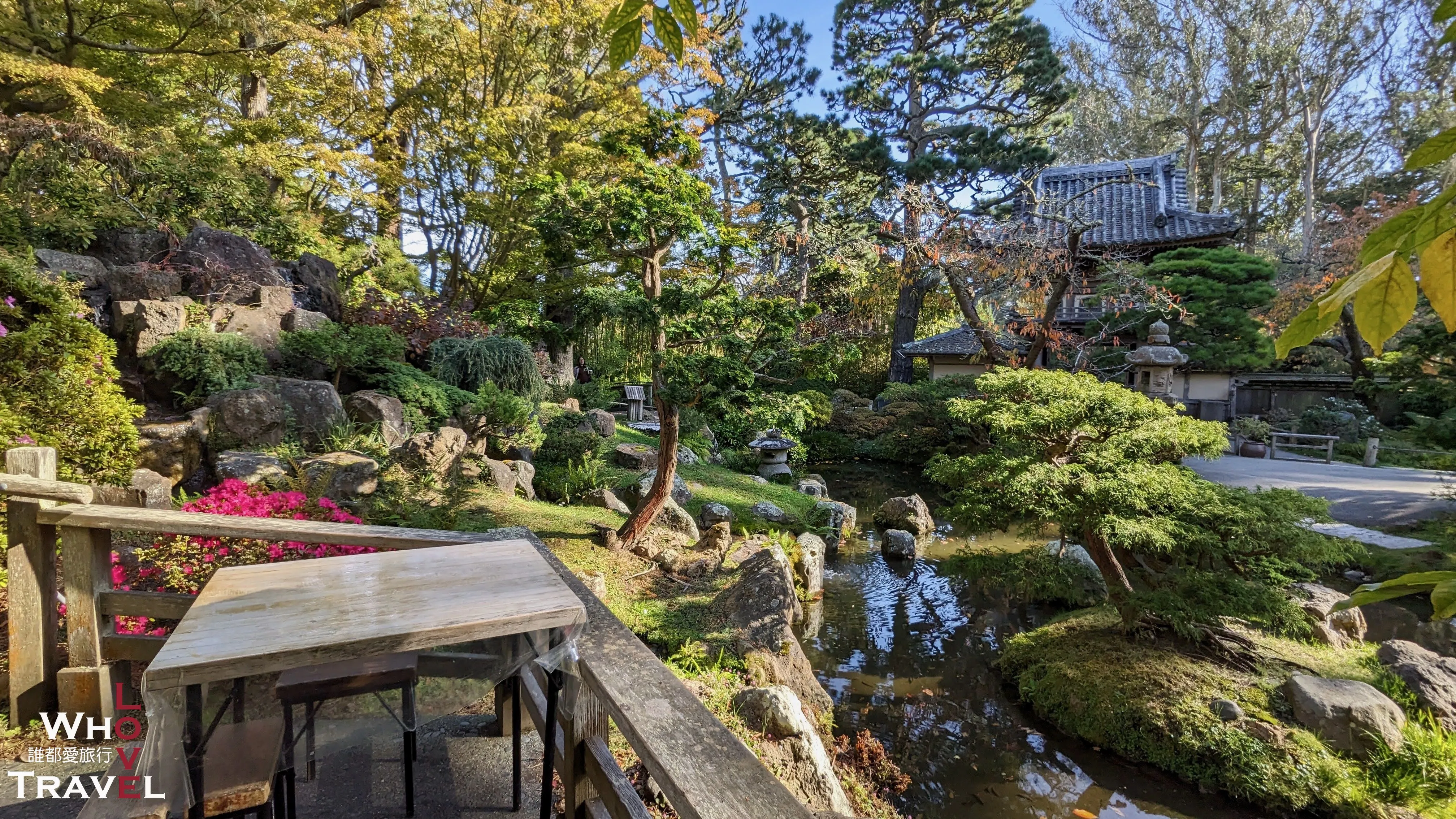
The front-row outdoor seating area offers a view that is straight out of a traditional Japanese landscape painting!
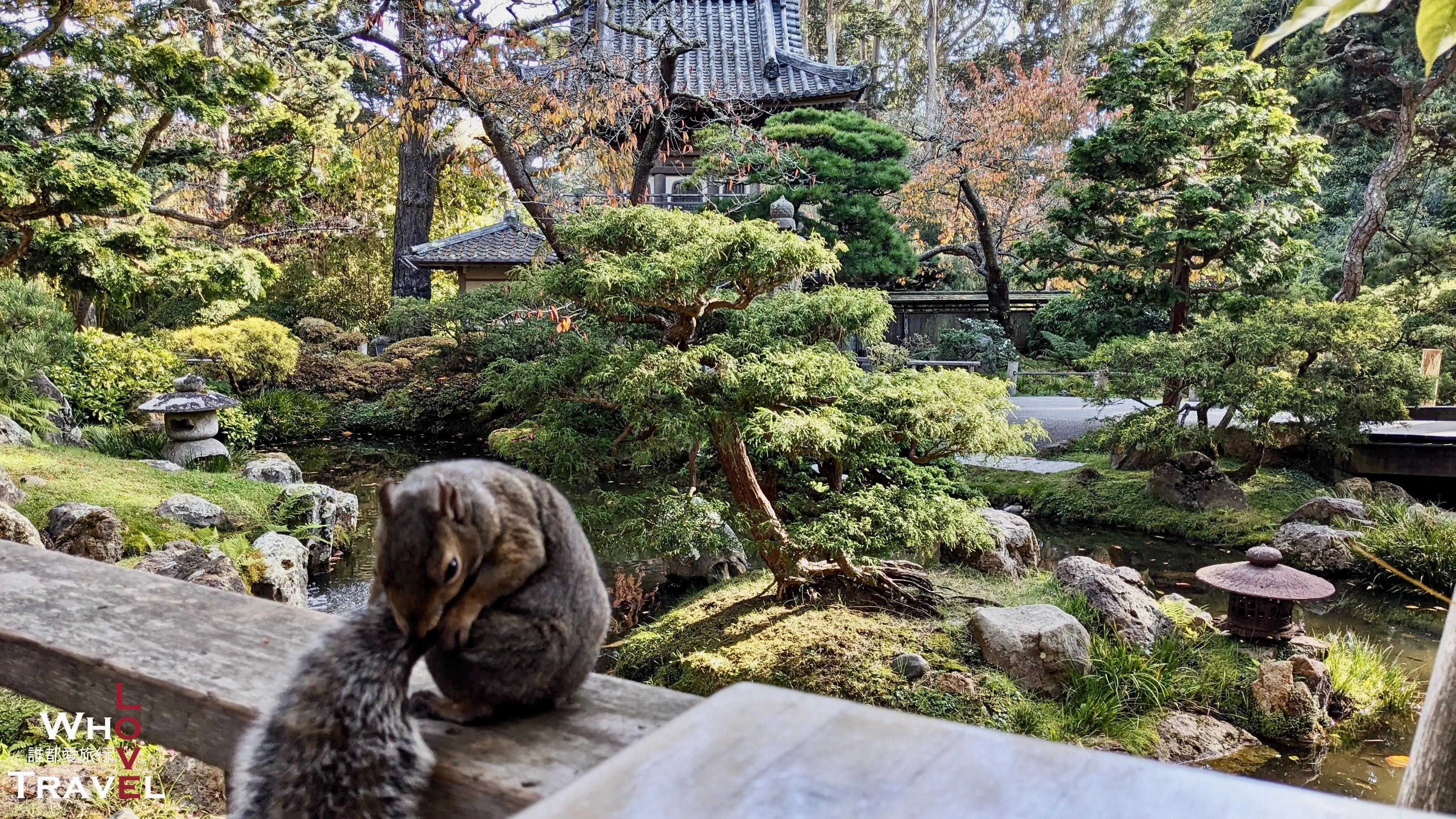
If you sit in the outdoor area, be careful of the little squirrels that might try to steal food right off your table! If you see a squirrel approaching, remember to move your food away. When we visited, a squirrel got super excited as it approached us. Before we knew it, the little guy dashed over and snatched my son's dorayaki (which he had only taken two bites of!), leaving behind a stunned mom and one bawling toddler… 😅
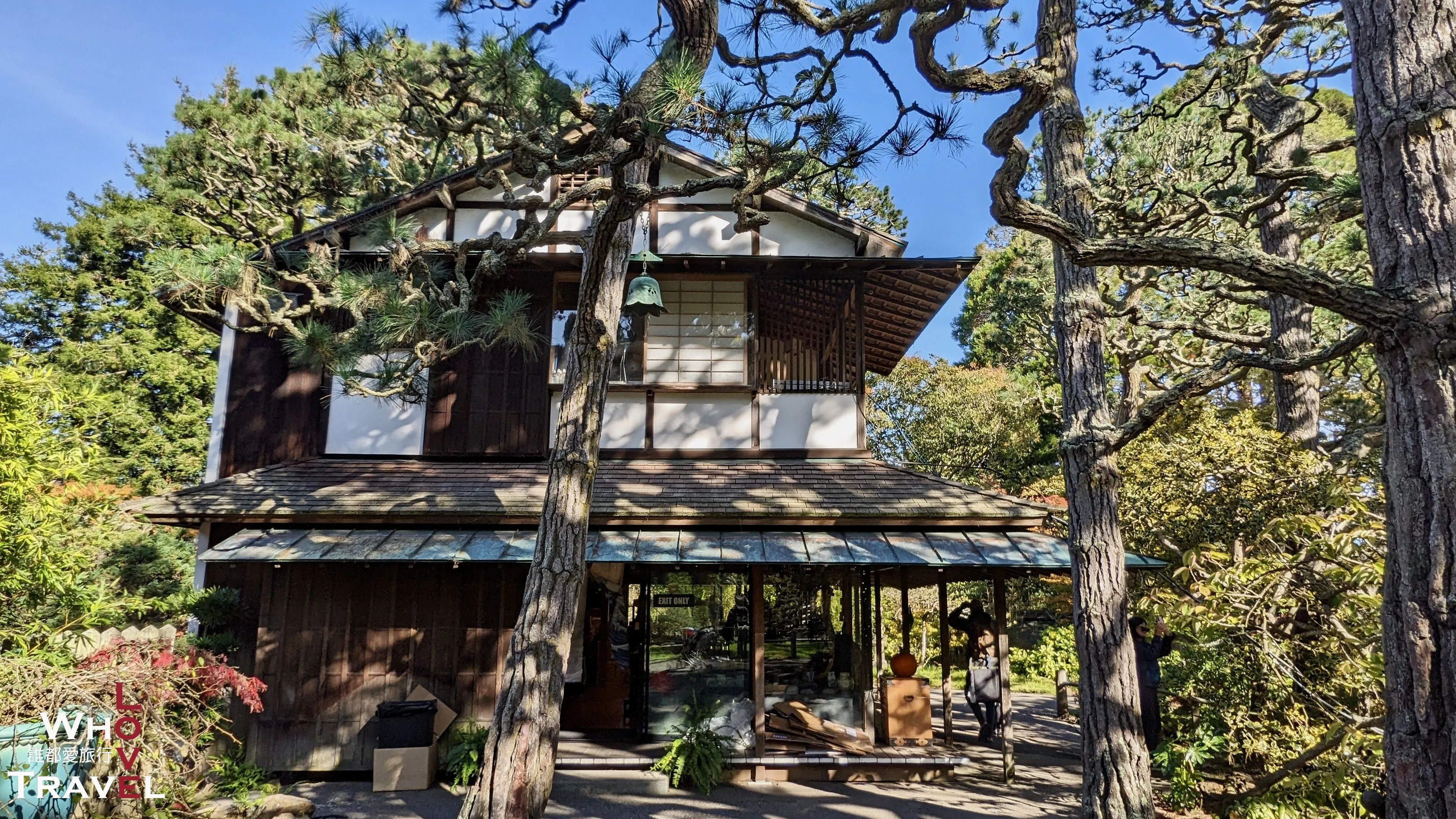
After eating and drinking your fill, you can browse the nearby souvenir shop, which is also housed in a beautiful Japanese-style building!
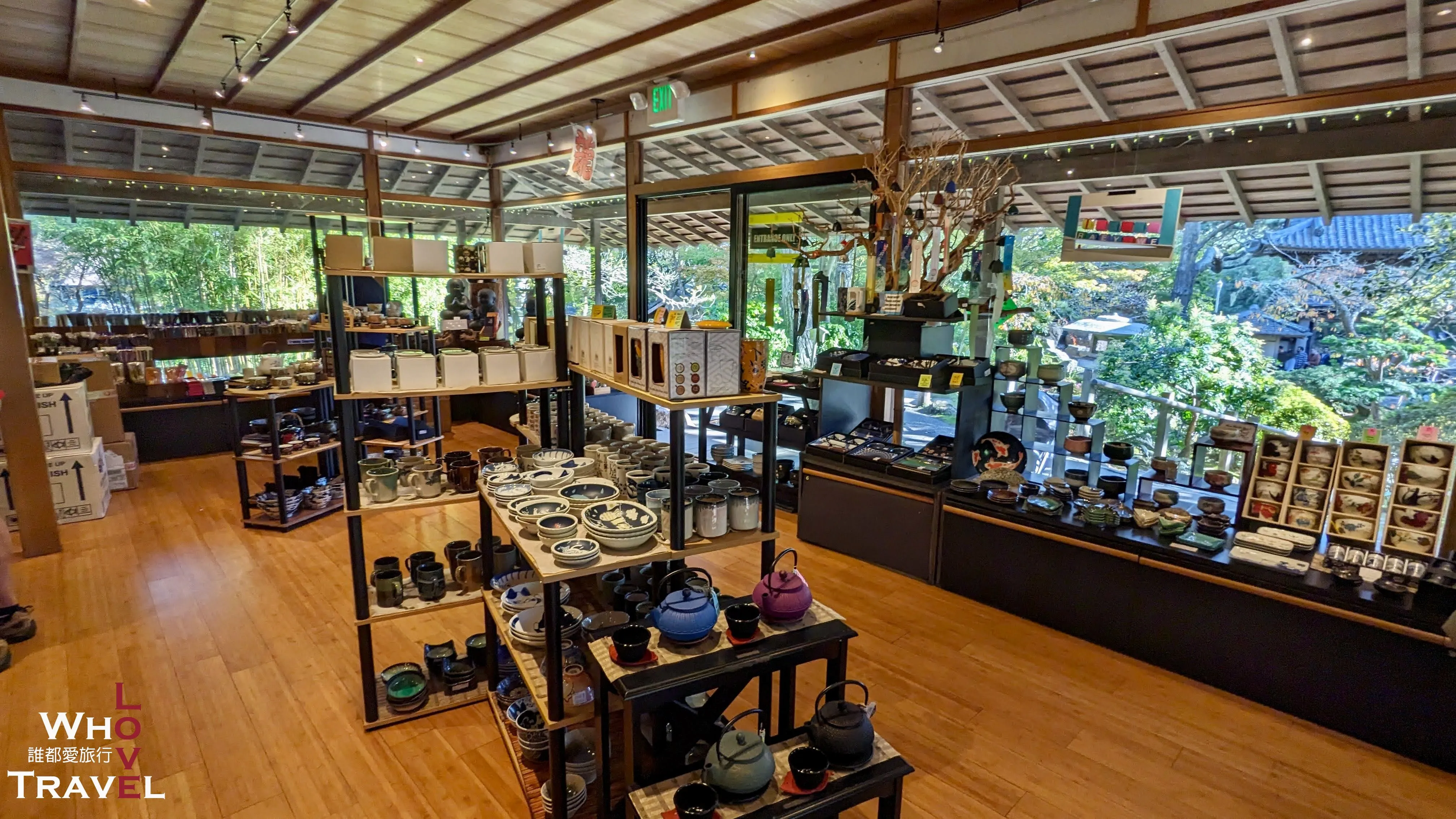
The shop is filled with tons of Japanese tea sets, bowls, plates, and more.
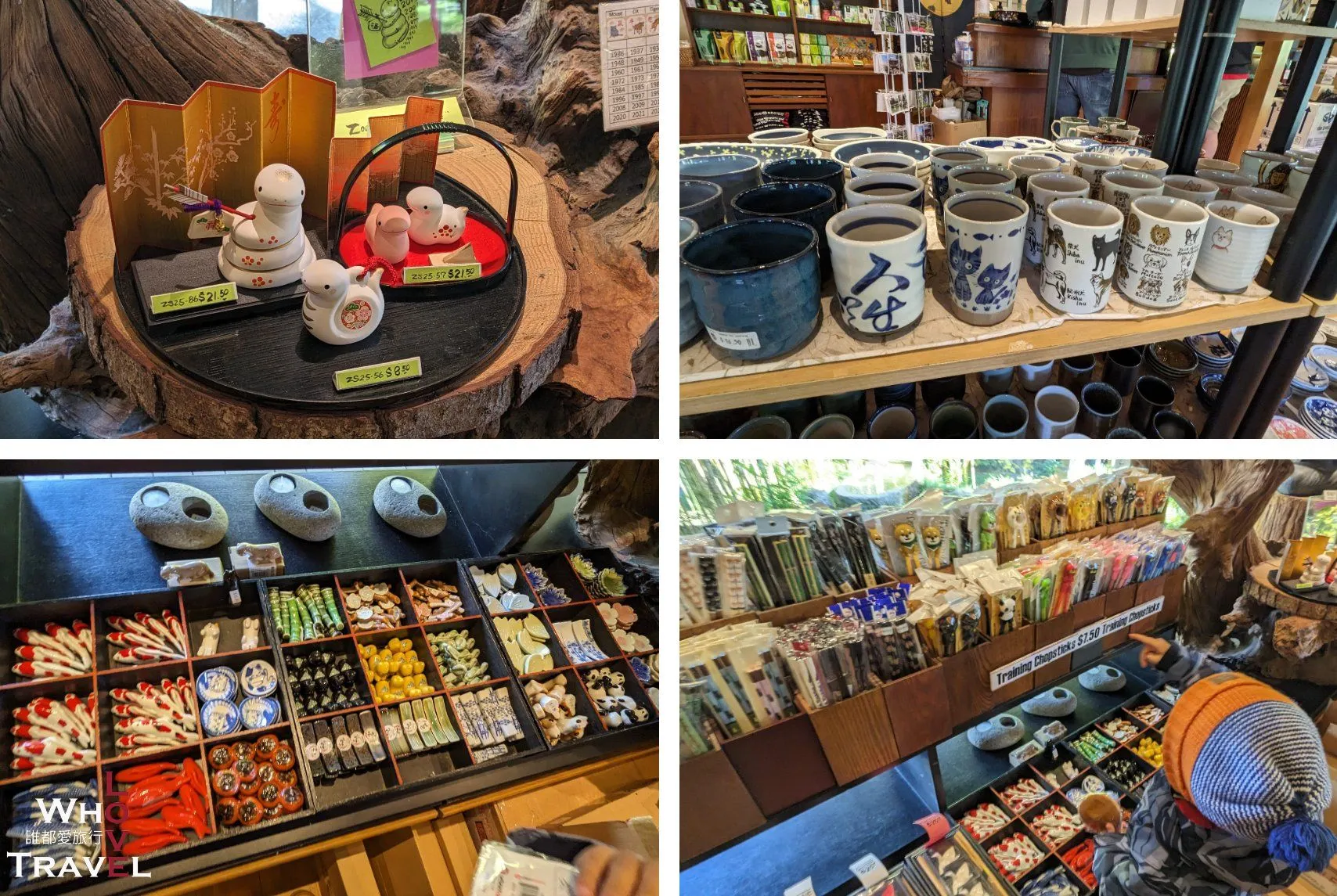
There are so many charming little Japanese items to look at; it really feels like being surrounded by the colorful world of Japan!
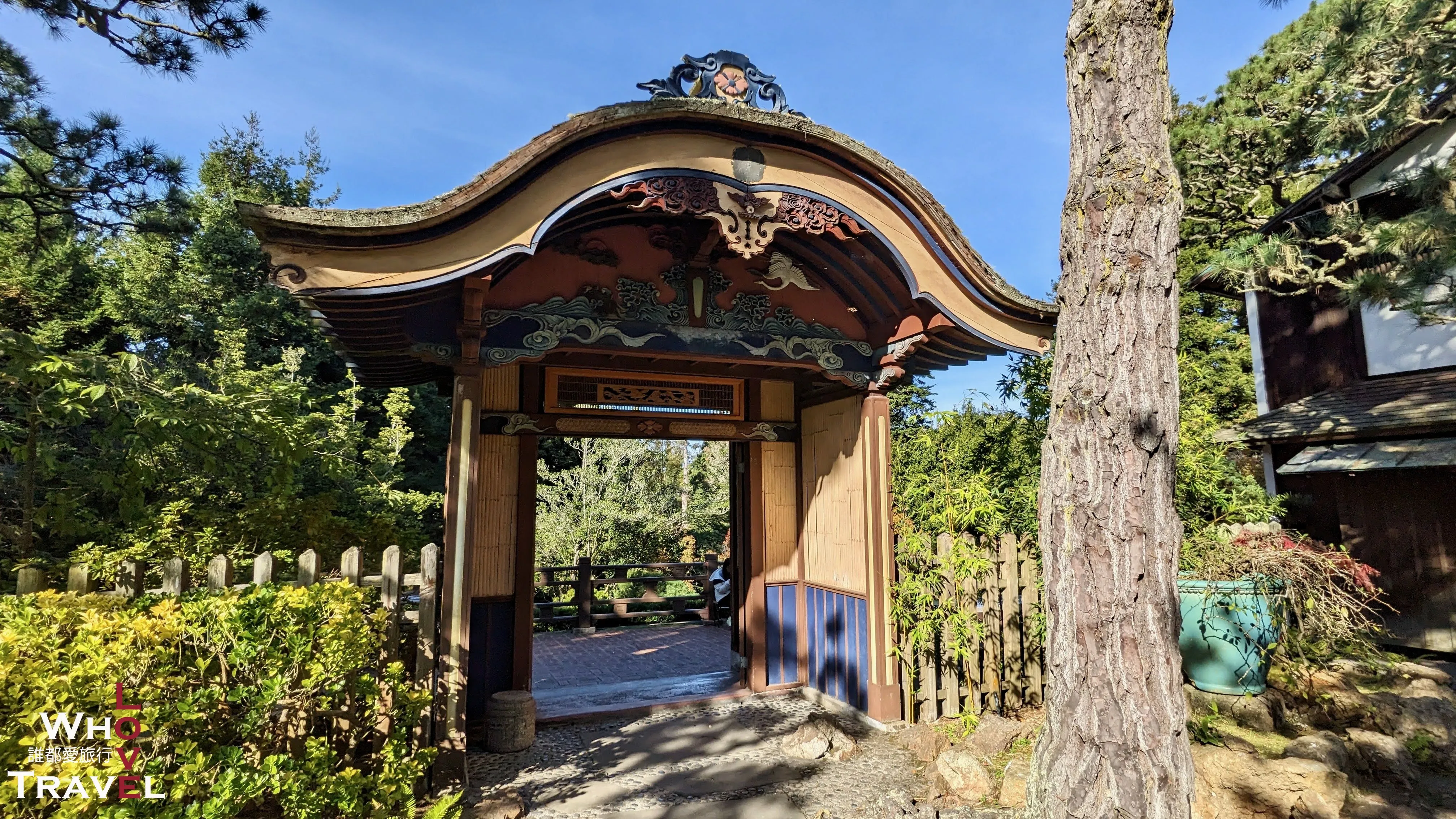
Located near the souvenir shop, the "Hagiwara Gate" holds a deep historical connection with the Japanese Tea Garden. The garden was originally built for the 1894 California Midwinter International Exposition in San Francisco, designed by Makoto Hagiwara, a Japanese landscape architect who immigrated to the US. After the exposition ended, the temporary "Japanese Village" exhibit was transformed into a permanent garden and continued to be expanded and maintained, eventually becoming the Japanese Tea Garden we see today!
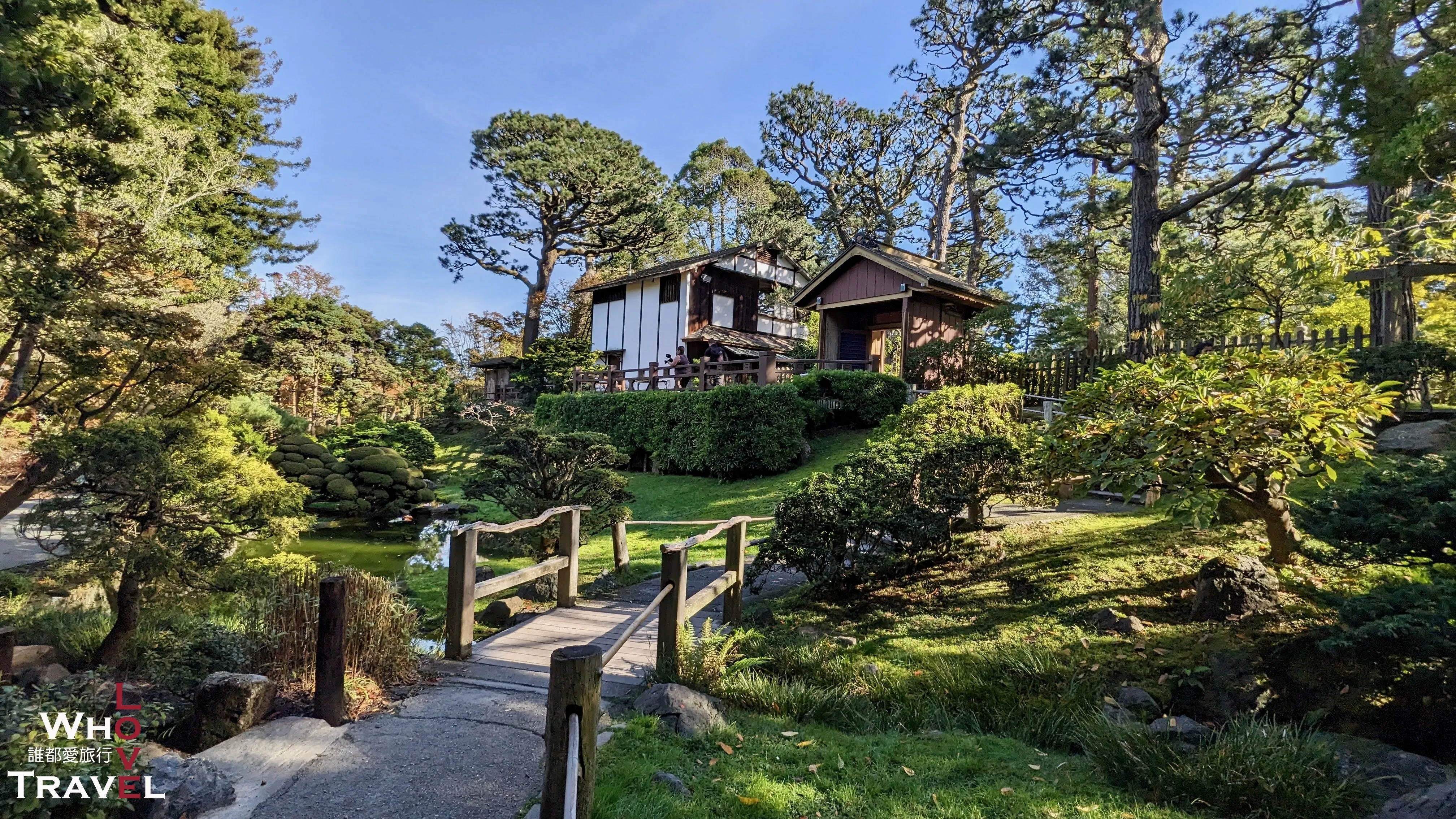
However, during World War II, due to anti-Japanese sentiment in the US, the garden was temporarily renamed the "Oriental Tea Garden," and its Japanese elements were downplayed. After the war, the garden gradually restored its original appearance, reclaimed the name Japanese Tea Garden, and continued to serve as a vital cultural landmark in San Francisco.
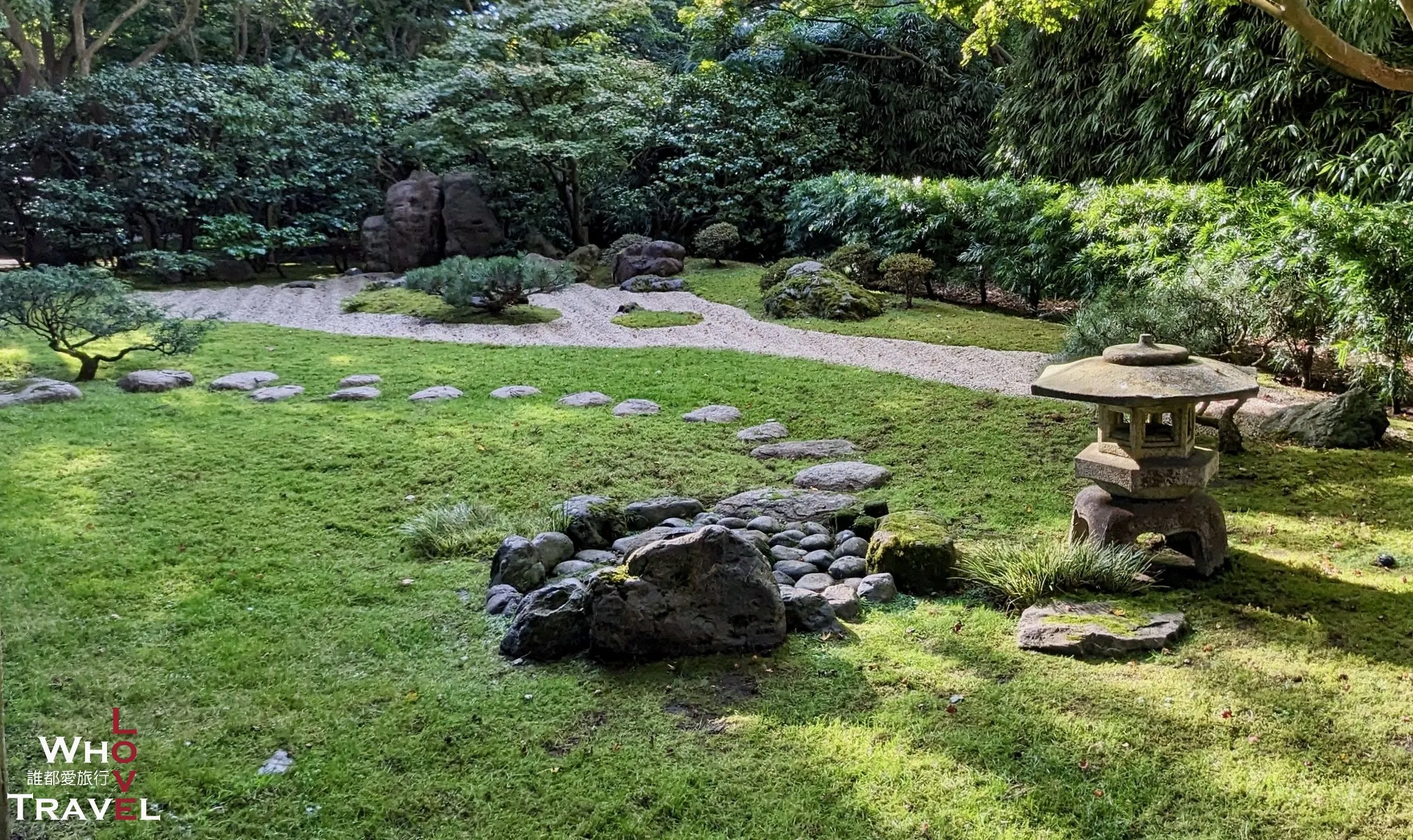
The highly representative traditional "zen garden" (karesansui) makes an appearance too! The karesansui mainly uses elements like rocks, gravel, and moss to simulate natural landscapes. The white gravel is raked into rippling patterns to represent flowing water, symbolizing both movement and tranquility!
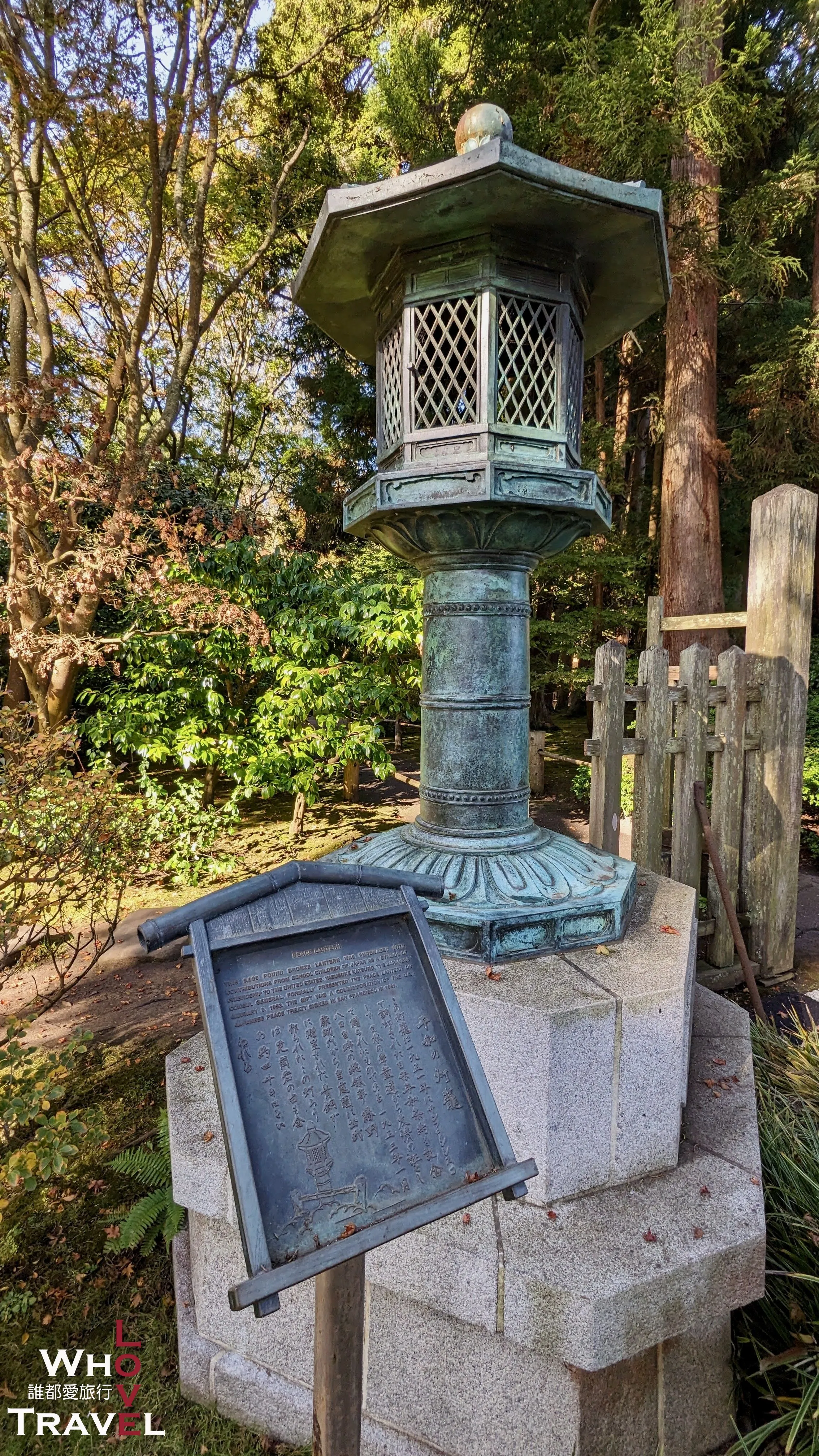
This bronze lantern is the Lantern of Peace. The bronze lantern and its granite base weigh an astonishing 4,000 kilograms (almost 9,000 lbs)! This lantern was gifted to the US by Japanese schoolchildren in 1951 when the US and Japan signed the Treaty of Peace, giving it profound historical significance.
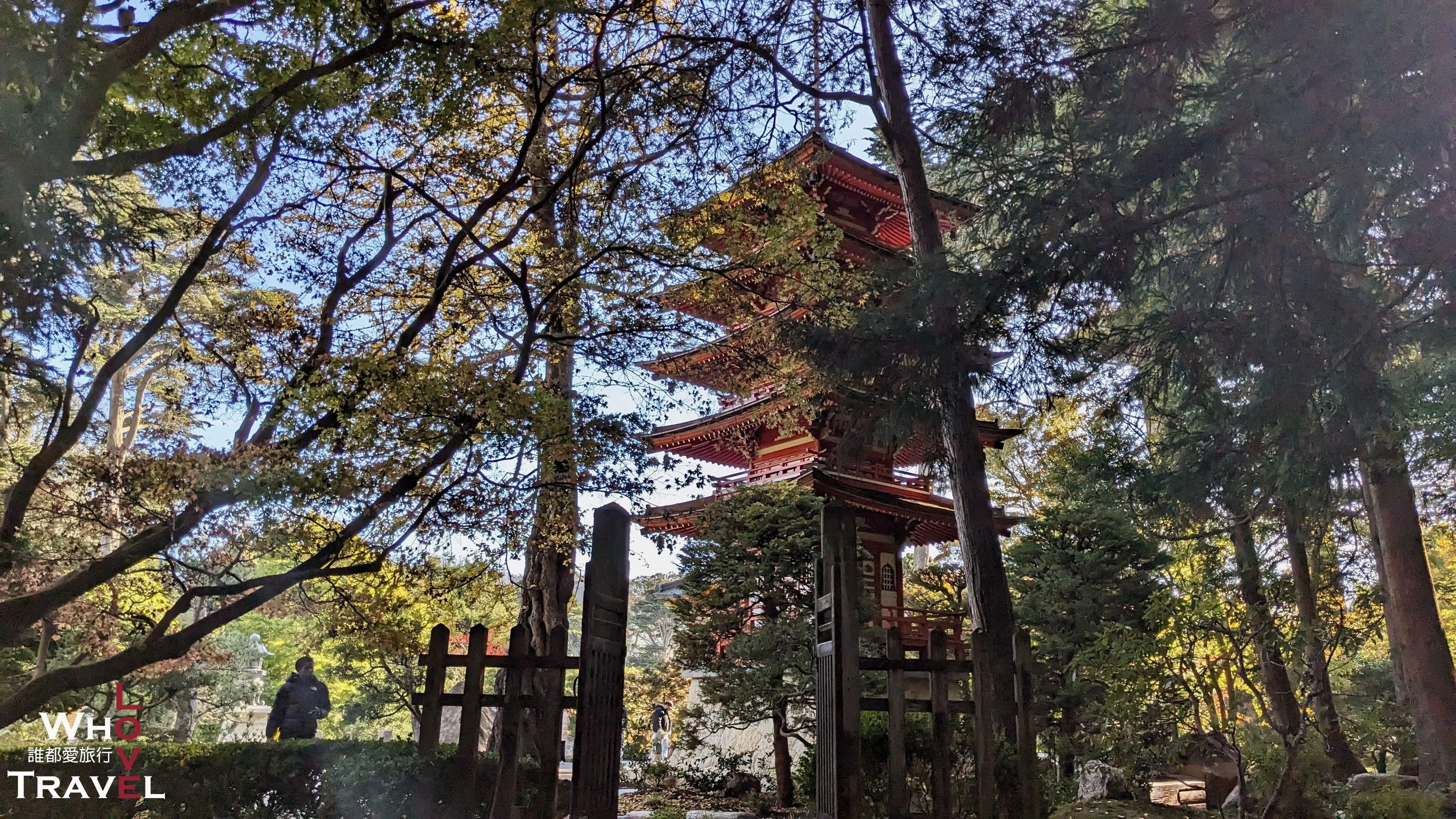
The five-story pagoda, faintly visible through the tree shadows, creates a wonderfully poetic atmosphere.
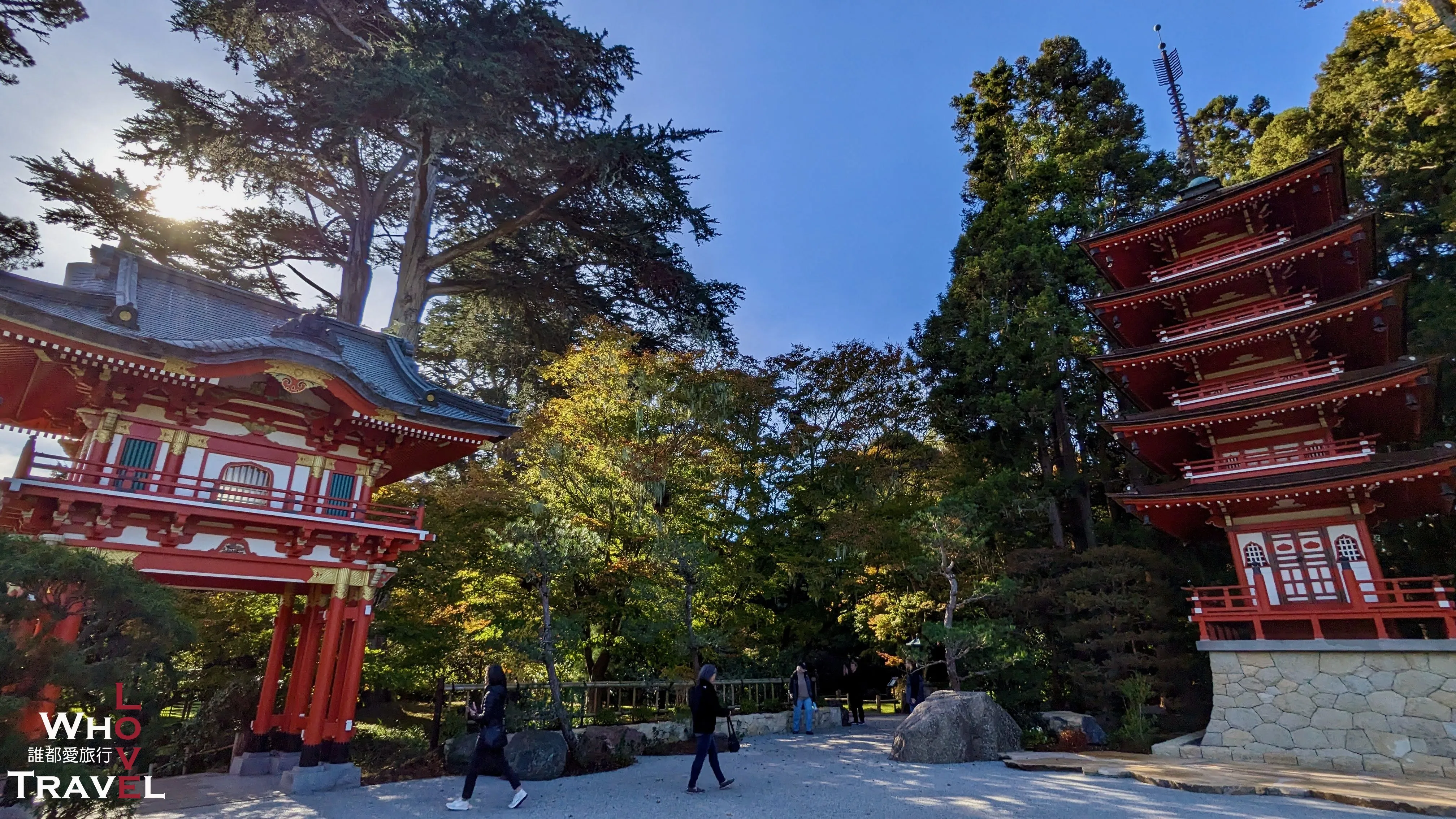
The Japanese five-story pagoda is a type of Buddhist architecture typically found in temples. It holds deep religious symbolism and is a masterpiece of Japanese wooden architecture. From bottom to top, each of the five tiers represents one of the five elements in Buddhist cosmology: earth, water, fire, wind, and void. Originally, pagodas were built to enshrine the relics (sarira) of Shakyamuni Buddha, so the five-story pagoda is often seen as a sacred object that houses Buddhist relics or symbolizes the eternity of the Dharma!
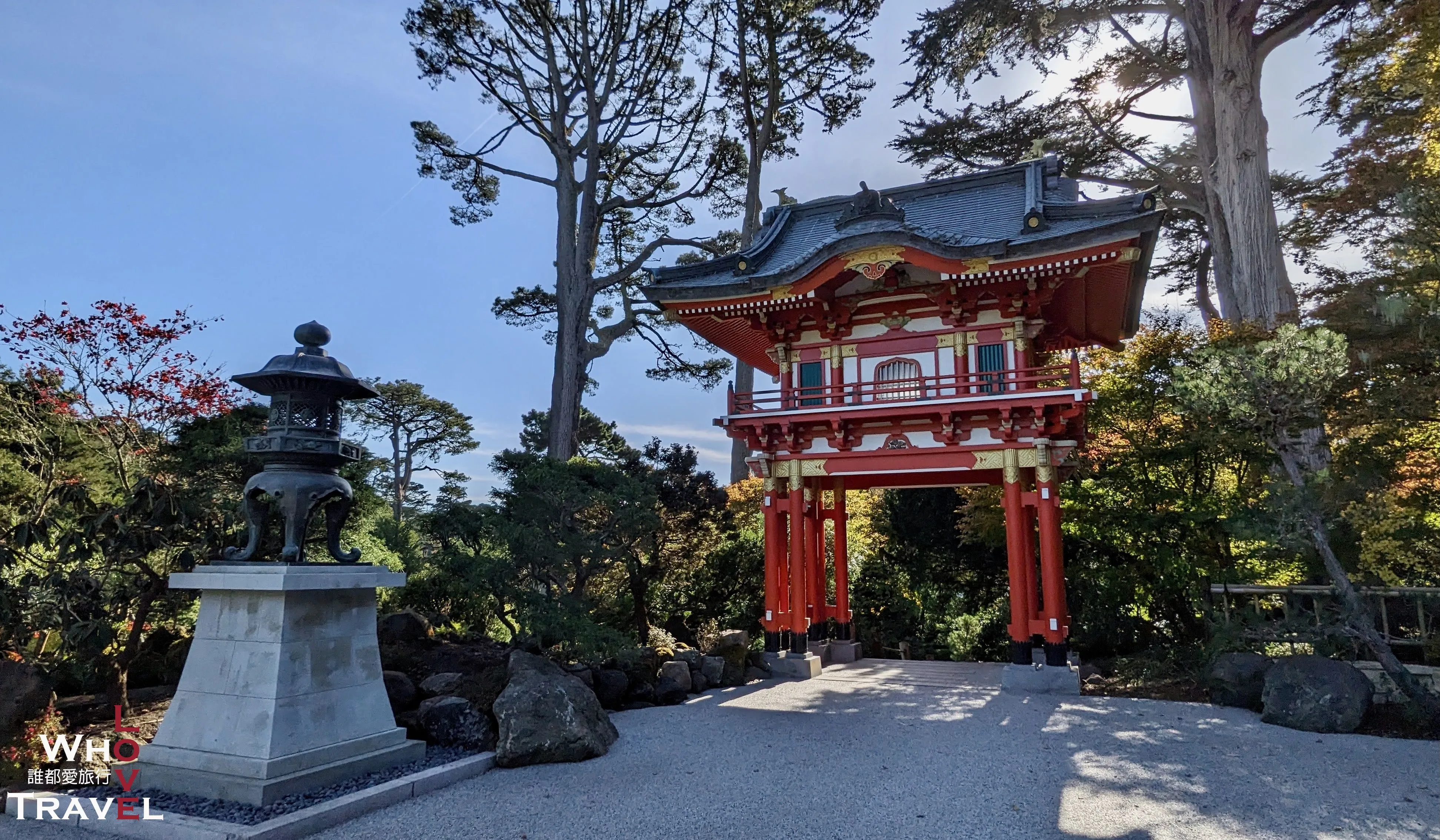
A classic shrine gate you often see in Japan—the Romon!
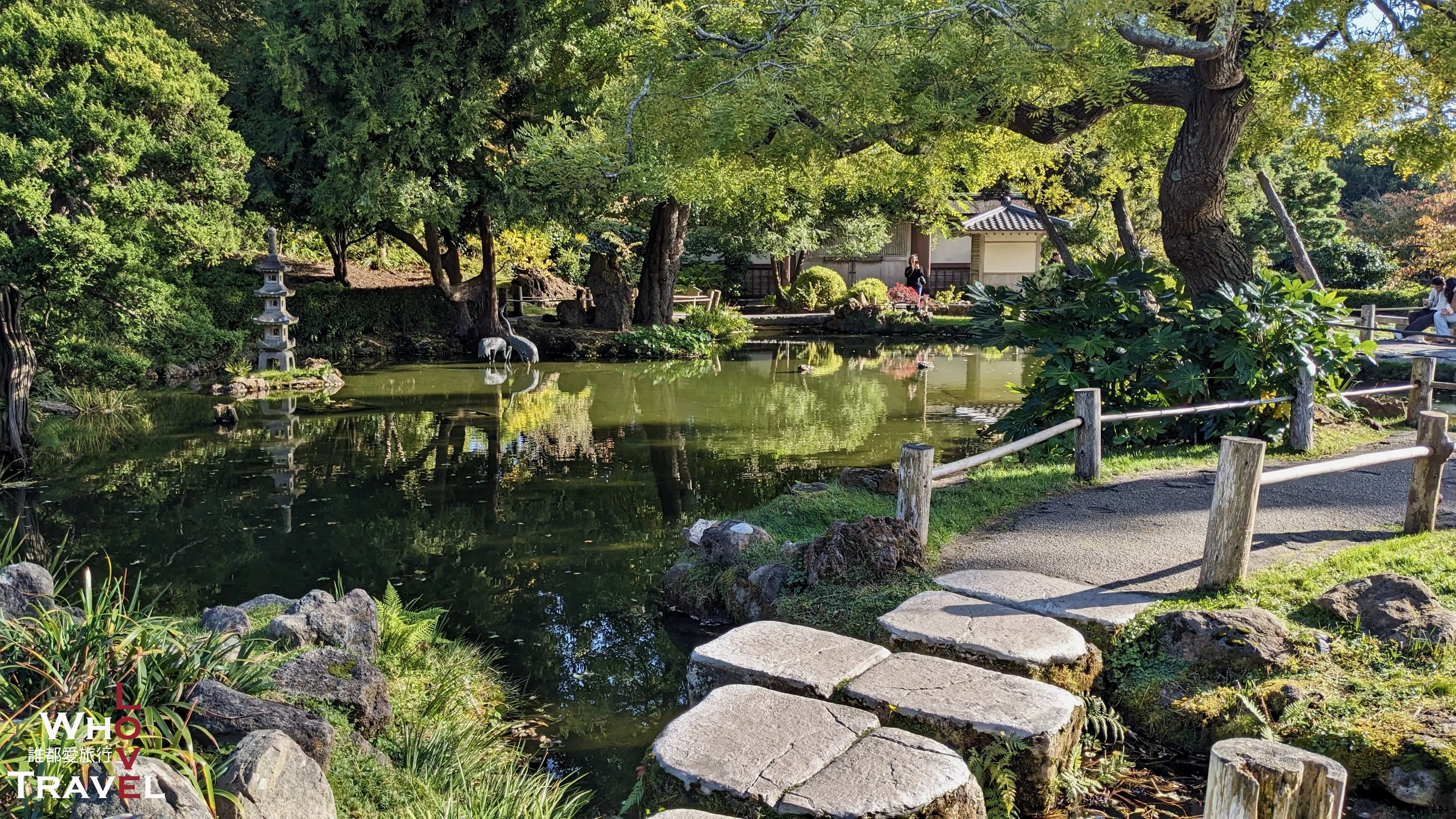
If you're visiting with a stroller, stone paths like this one won't be accessible. But don't worry, you can easily take a slight detour to reach wherever you want to go.
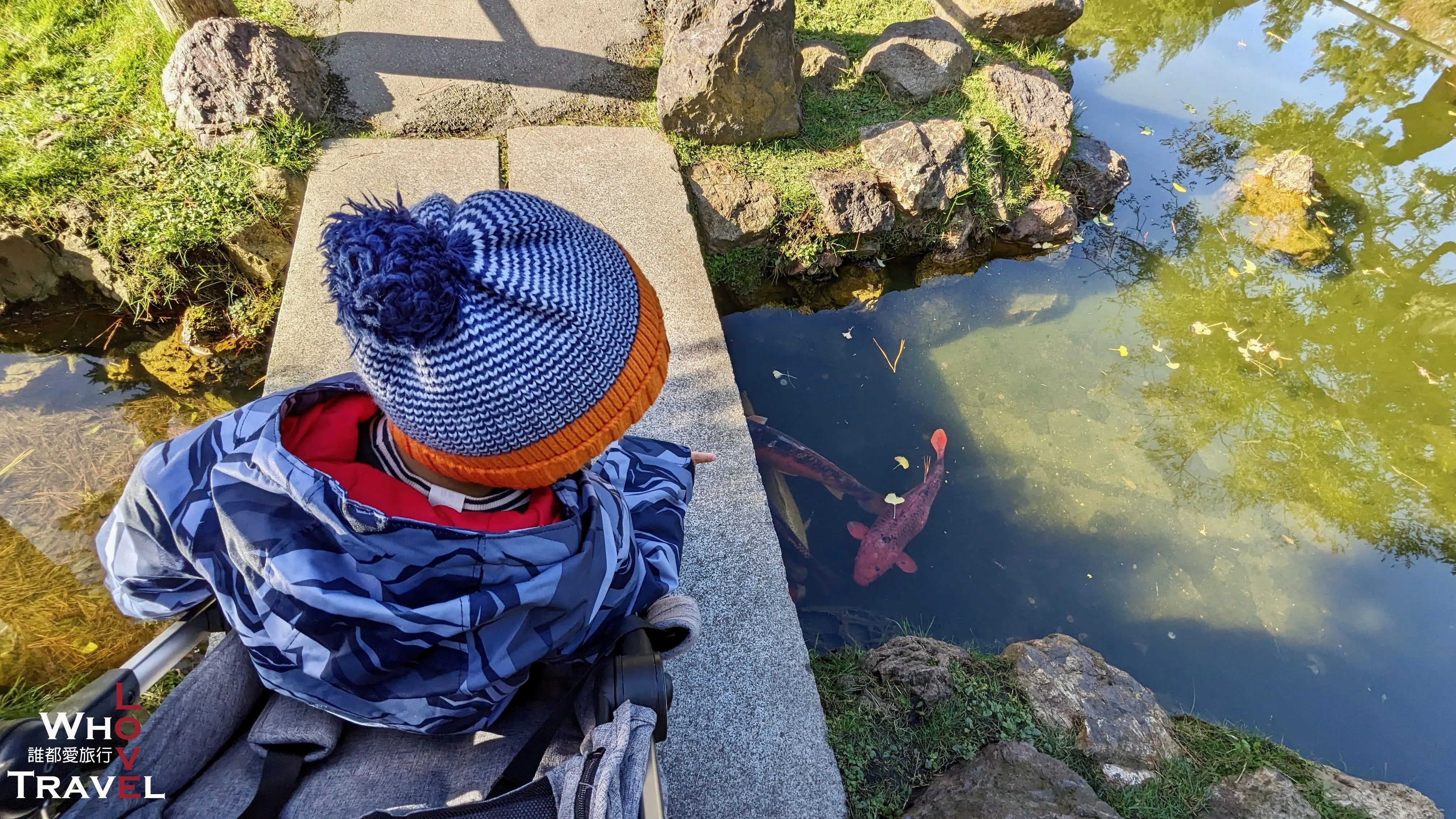
The ponds in the garden are filled with koi fish, which the little ones absolutely love watching!
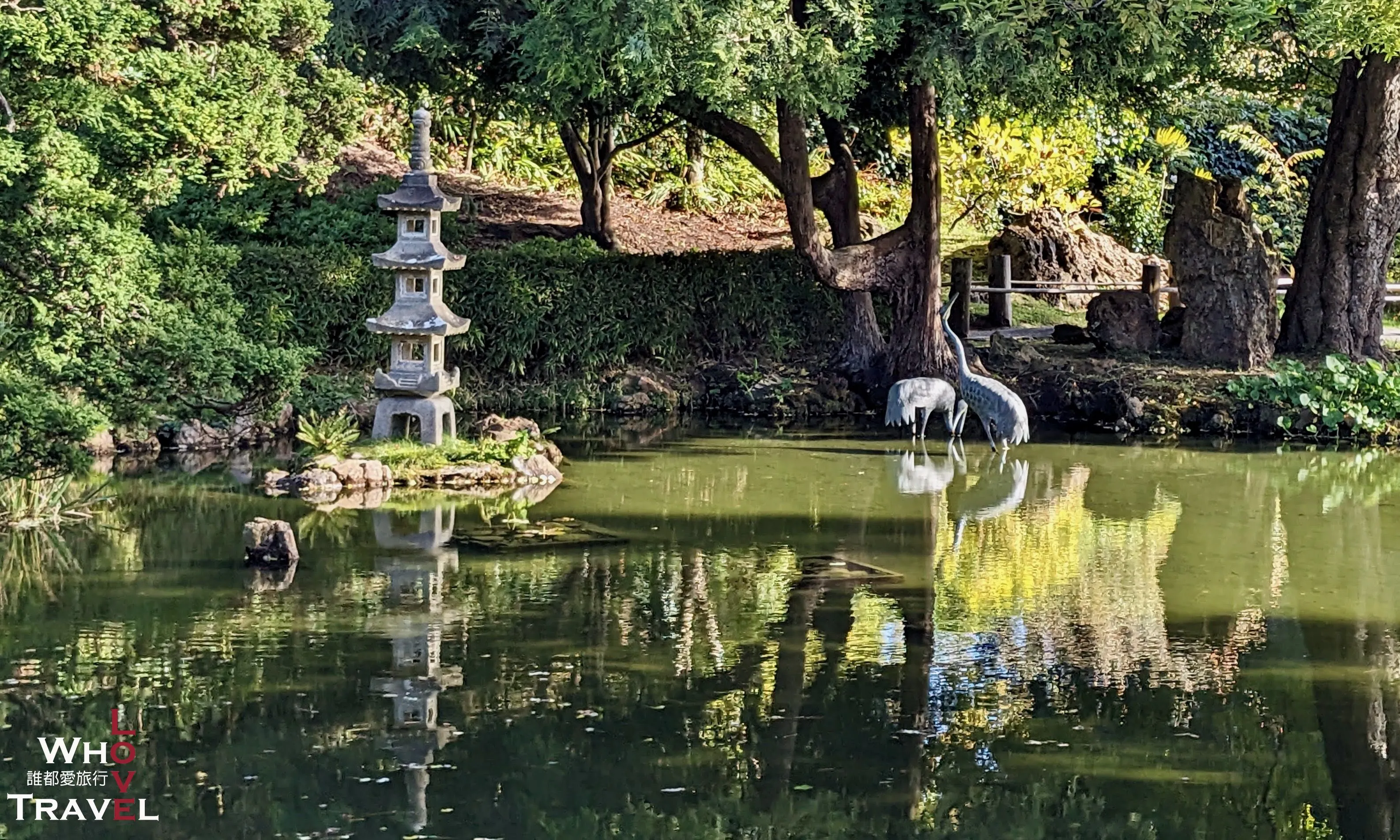
The landscaping above the water surface is also very Japanese. You'll spot a three-story pagoda, common in Buddhist temples, alongside a "crane," which symbolizes luck, longevity, and peace in Japanese culture. The reflections of the pagoda and the crane on the water create a wonderfully leisurely and serene scene!
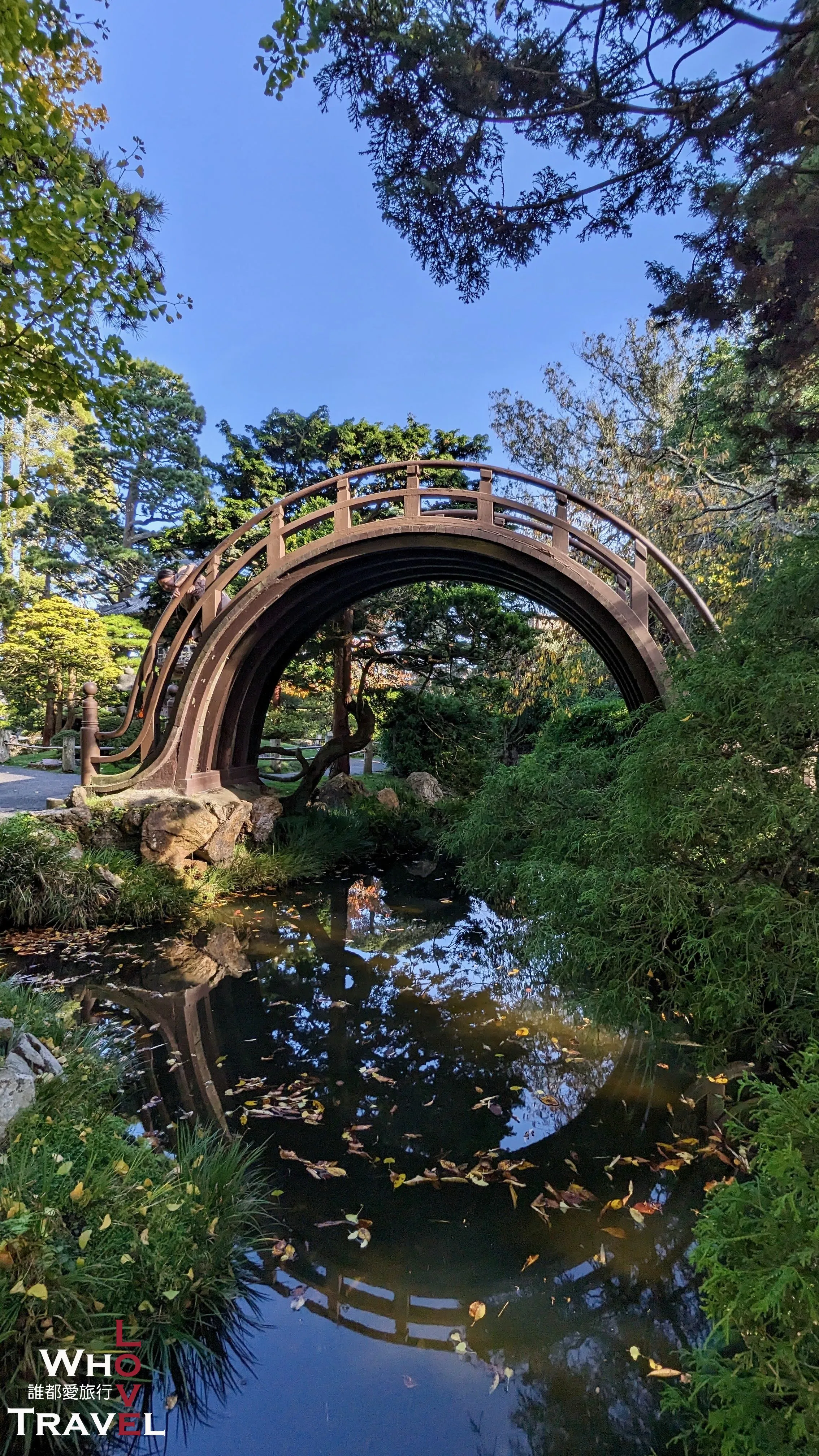
This distinctively shaped bridge is called the "Taiko Bashi" (Drum Bridge), and it's one of the most iconic structures in the Japanese Tea Garden. Its deck is designed in a semi-circle, so when reflected in the water below, it forms a complete circle resembling a drum! This symbolizes completeness and harmony. The elevated design allows small boats to smoothly pass underneath. Don't let the steep incline fool you—you can actually walk across the Drum Bridge!
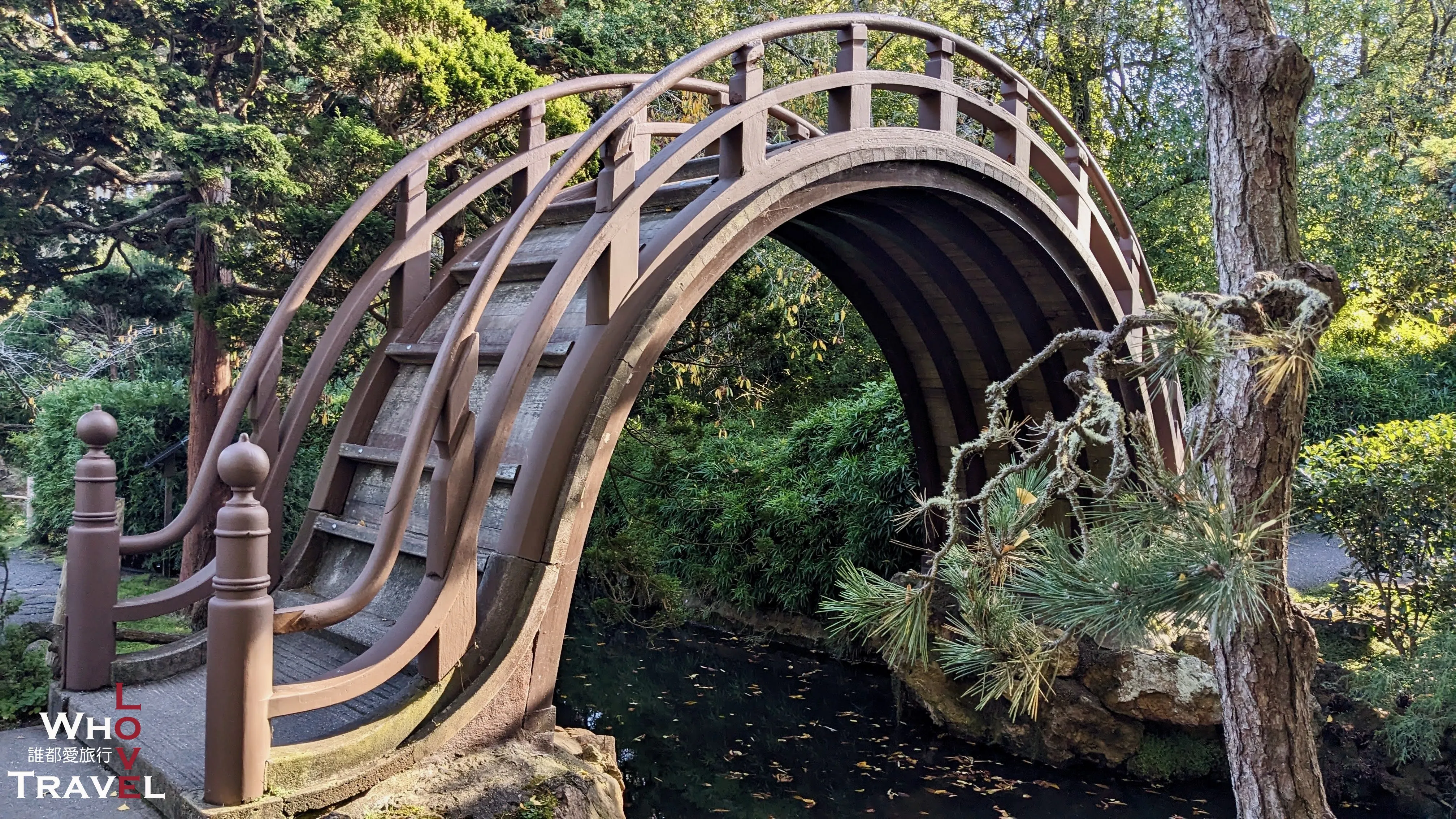
The Drum Bridge was originally designed by Japanese architect Shinshichi Nakatani in 1894 as part of the California Midwinter International Exposition. Since the US lacked suitable building materials at the time, the bridge was actually built in Japan, disassembled, and then shipped all the way to San Francisco! After the expo ended, this magnificent bridge was kept in the Japanese Tea Garden, where it remains to this day.
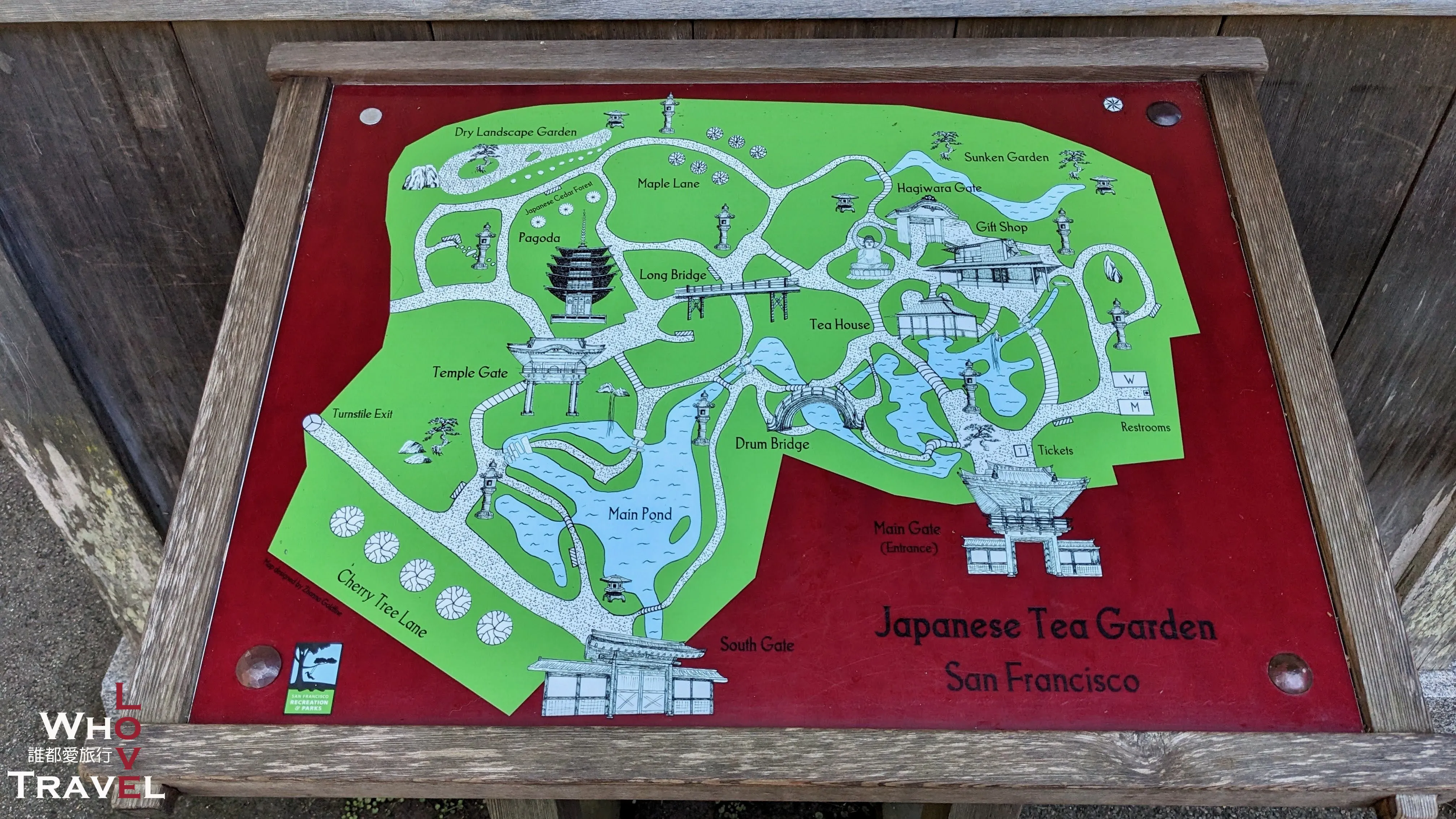
A trip to San Francisco's Japanese Tea Garden not only lets you immerse yourself in the charming bridges, flowing waters, and lush plantings of a Japanese garden, but also gives you a chance to see many traditional architectural and garden designs all at once, such as the five-story pagoda, the Romon gate, and the zen garden. The Japanese Tea Garden is more than just a tourist attraction; it's a place where historical memory, cultural exchange, and natural aesthetics intertwine. If you ever have the chance to visit San Francisco, we highly recommend adding this to your itinerary! Quietly watching the koi swimming leisurely in the verdant ponds might just help you find a rare moment of peace right in the middle of the city. Also, keep in mind that admission is slightly more expensive on weekends than on weekdays. If you're looking to save a few bucks, you can visit during the free admission hours: Mondays, Wednesdays, and Fridays between 9 AM and 10 AM!
⛩️ San Francisco Travel Guide
★ Transport: Hop-On Hop-Off Sightseeing Bus|Car Rental
★ SIM Cards: USA/Canada/Mexico SIM Delivery|USA eSIM
★ Tickets: Explorer Pass|California Academy of Sciences|de Young Museum|Walt Disney Family Museum
★ Cruises: Bridge to Bridge Cruise|Golden Gate Bay Cruise|Alcatraz & San Francisco Bay Cruise|Alcatraz Prison Tour
★ Tours: Wine Country Day Tour|Muir Woods & Sausalito
★ Day Trips: Yosemite National Park
★ Guide: Ultimate San Francisco Travel Guide|Target Shopping List
There are so many amazing attractions to explore in San Francisco. If you're interested in other spots and want to know the best way to plan your route, be sure to check out the Ultimate San Francisco Travel Guide put together by Cherry!
⛩️ More San Francisco Travel Articles
★ [Ultimate San Francisco Travel Guide] Top 35 Attractions ★ Maps, Transport, Accommodation, and Itinerary
★ [Free San Francisco Attraction] Traveling Through History ★ Exploring the San Francisco Cable Car Museum
★ [San Francisco Travel] Yoda Fountain & Star Wars Mini Exhibit ★ A Hidden Gem in a Quiet Park
★ [San Francisco Travel] Colorful Painted Ladies ★ History and Modernity Weave the Classic City Skyline
★ [San Francisco Travel] The Half-Century Legend of Fortune Cookies ★ Golden Gate Fortune Cookie Factory
★ [San Francisco Travel] City Lights Bookstore: A Literary Museum
★ [Guardian of San Francisco's Sky] Exploring the Unique Aesthetics of the Transamerica Pyramid
★ [San Francisco Travel] Relive Classic Arcades ★ Explore the Nostalgic World of Musée Mécanique
★ [San Francisco's Sweet Corner] Historic Factory, Ocean Views & Viral Desserts in One Stop ★ Ghirardelli Square
★ [San Francisco Travel] Local Secret Spot ~ A Hidden Park in the Sky
★ [San Francisco Family Attraction] America's Wildest Interactive Museum ~ Even Adults Won't Want to Leave!
★ [San Francisco Family Attraction] 4-in-1 Incredible Value ~ A Mind-Blowing Journey at the California Academy of Sciences!
⛩️ Other Travel Guides
★ USA: New York|San Francisco|Las Vegas
★ Islands: Tahiti|Maldives|Fiji
★ Southeast Asia: Bali|Phu Quoc|Koh Samui
★ Europe: Finland|UK
★ Middle East: Doha|Dubai|Abu Dhabi


